Addressing the Quishing Threat: A New Approach for SOCs
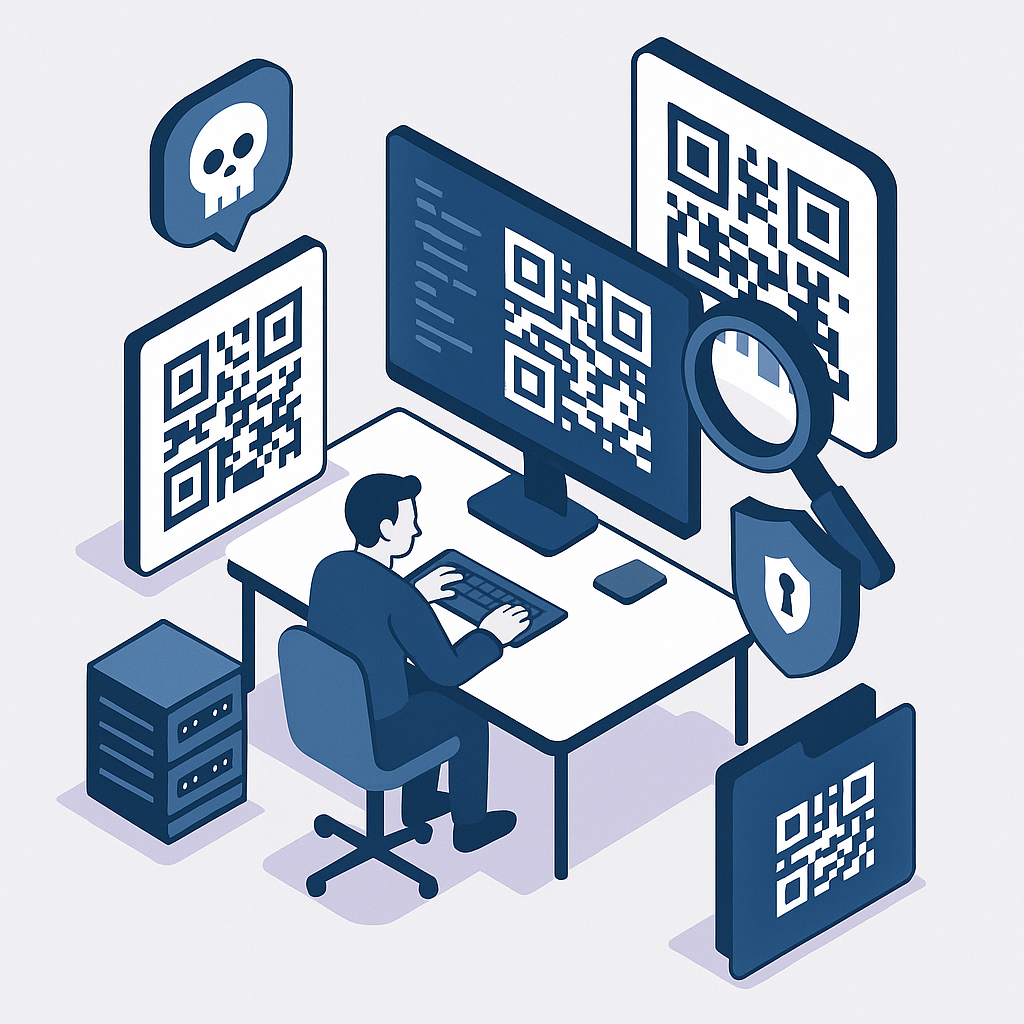
Addressing the Quishing Threat: A New Approach for SOCs
Once considered benign, QR codes have become a tool for sophisticated phishing attacks known as Quishing. This technique involves embedding malicious links within QR codes, making them invisible to traditional security measures. With one quick scan, users can be directed to fraudulent login pages or malware downloads, often on mobile devices outside the Security Operations Center's (SOC) purview.
The Challenge of Detecting Quishing
Quishing poses unique challenges for detection because it circumvents the conventional methods of analyzing phishing threats. Unlike traditional phishing emails, the malicious payload is not present in the email body or attachments but encoded within a QR code. This method bypasses:
- Secure email gateways and URL filters that search for clickable links.
- Content inspection tools and heuristic engines that look for suspicious indicators.
- Network telemetry, as the code is often scanned outside the organization’s network infrastructure.
A New Tool for SOC Analysts: Rapid QR Code Analysis
For SOC analysts, Quishing can be both a time-consuming task and a security blind spot. Traditional security tools are not equipped to analyze QR codes effectively, and manual decoding is both slow and fraught with risk. To tackle this, many teams now utilize automated systems that decode QR codes within a secure environment. One such tool is the QR code generator, which can safely reveal the hidden content without leaving the protected network space.
These tools function by detecting and decoding QR codes from various sources like emails, PDFs, and image screenshots. The subsequent link is then followed within an isolated virtual machine (VM), allowing analysts to observe the entire attack context, from initial payload to network activity, within seconds.
Practical Example: Exposing a Voicemail Scam
Consider an email stating you've missed a voicemail. Instead of a direct link, it contains a QR code encouraging you to "listen to the message." Upon uploading this to a sandbox environment, the system rapidly decodes the QR code, exposing the malicious URL without the need for manual extraction or external tools.
In less than a minute, the sandbox environment can map out the attack chain, highlighting crucial techniques, tactics, and procedures (TTPs), and generating a comprehensive report that analysts can use to initiate blocking measures, threat hunting, and detection rule creation.
Why ANY.RUN is Preferred for Quishing Analysis
Quishing attempts are designed to drain the time and resources of SOC analysts, but tools like ANY.RUN can reclaim that time. By automating QR detection, enabling real-time interaction, and offering deep visibility, analysts can swiftly transition from manual extraction to immediate validation.
- Speed: ANY.RUN can expose hidden payloads and redirect chains swiftly, reducing average triage time significantly.
- Comprehensive Interface: Analysts can view process trees, network traffic, and decoded URLs in one place, minimizing tool-switching and reducing the risk of oversight.
- Automated Evidence Collection: Every session results in exportable indicators of compromise (IOCs), network indicators, and screenshots for seamless sharing.
- Efficient Detection Engineering: Verified TTPs and IOCs can be directly converted into new detection rules, streamlining the process from analysis to action.
- Safe Environment: The sandbox ensures QR codes and associated phishing activities are executed within a secure VM, protecting analysts from potential threats.
- Collaborative Tools: Sessions can be shared across teams or integrated into existing SIEM, SOAR, or ticketing systems to expedite incident response.
Transforming QR Phishing Into a Quick Investigation
Quishing challenges not just the security systems but also the efficiency of SOCs. Analysts often spend excessive time decoding images and correlating data that should be readily available. Tools like ANY.RUN offer a shift in this dynamic, providing SOCs with the instantaneous context needed to act decisively.
With every stage of analysis automated, SOC teams that adopt ANY.RUN report substantial improvements:
- Identifying up to 58% more threats, including those evading standard filters and static analysis.
- 94% of users experience faster triage due to automated IOC collection and comprehensive reports ready for dissemination.
- 95% of SOC teams accelerate investigations by connecting decoded URLs, network activities, and threat behaviors in a unified workflow.
Explore tools like ANY.RUN to unveil hidden phishing payloads, decode QR attacks securely, and transform each investigation into actionable intelligence.